Campground Tycoon: the story so far
In a little under two weeks it went from a static campground to a living valley that books itself, burns in a drought, and freezes over by December. Here's the road so far — and where it's headed.

Campground Tycoon started from a small, warm question: what if running a little campground in the American wilds felt as good as visiting one? You're a ranger — not a spreadsheet. You walk your own grounds, light the fire rings, and watch the season turn. A little under two weeks and eighteen updates later, that sketch is a real isometric sim, and this is the log of how it got here.
It's playable in the browser right now — no download, no launcher — and everything below shipped as a merged pull request, each one also written up in the game's in-game What's new. I build it in the open, so the roadmap is public and the next batch is already in flight.
The idea
Pick a patch of country, buy the land, build the grounds, and keep four kinds of camper happy — anglers, hunters, hikers and sightseers — while four fickle seasons roll over the valley. There are fifteen regions to choose from, each a real place with its own climate, crowd and terrain. Everything since the first build has been about making that fantasy deeper without making it fussy.
From a sketch to a sim
The earliest park was mostly scenery — hand-drawn regional wildlife, structures and landmarks, but not much going on. The first real leap was giving the world a life of its own. You got to create your ranger — name and outfit them — click or tap to move and interact, and open the Ranger's Almanac, a live day/night clock and seasonal calendar.
Then the guests grew inner lives. Anglers now walk out to the water and hunters head for the hunting grounds; buildable trail signs point the way; and the Buck Hunters split off a separate Bird Hunter archetype. Suddenly the campground wasn't a diorama — it was a place people used.
Money, weather, and consequences
A sim needs stakes. The Front Desk arrived first: the market starts booking your park ahead on a calendar, a No Vacancy sign softens turn-aways, walk-ups pay a premium, and a new Bank lets you borrow to expand and repay with daily interest. The general store became a Gear Shop with passive income (bigger from anglers and hunters), downtime got minigames — s'mores roast, stargazing, stocking the shelves — and a smartphone unlock let you open the booking terminal from anywhere.
Weather got teeth next. Every region picked up a real climate — desert, alpine, forest, gulf — shaping its terrain and its skies: desert dust and flash floods, Smokies fog, alpine snow. And severe weather started to matter: evacuate your campers before a tornado, hurricane or flood, or they get hurt and your rating drops with the temperature. A storm shelter and siren help you get them out in time. Alongside it came a Message Center and Guest Book, staff who gain experience and speed up, and a level cap raised to 20.
Severe weather has teeth: evacuate the campers before the tornado, or watch your rating drop with the temperature.
Your park, your way
This was the update that changed the genre of the game. You now free-design the whole park — every campsite and building is placed by you; only the entrance booth stays put — and once you've filled and upgraded your plots, you buy land to expand the map in a direction. The Almanac became a true calendar with slower fourteen-day seasons and a long-range forecast that gets fuzzier the further out you look.
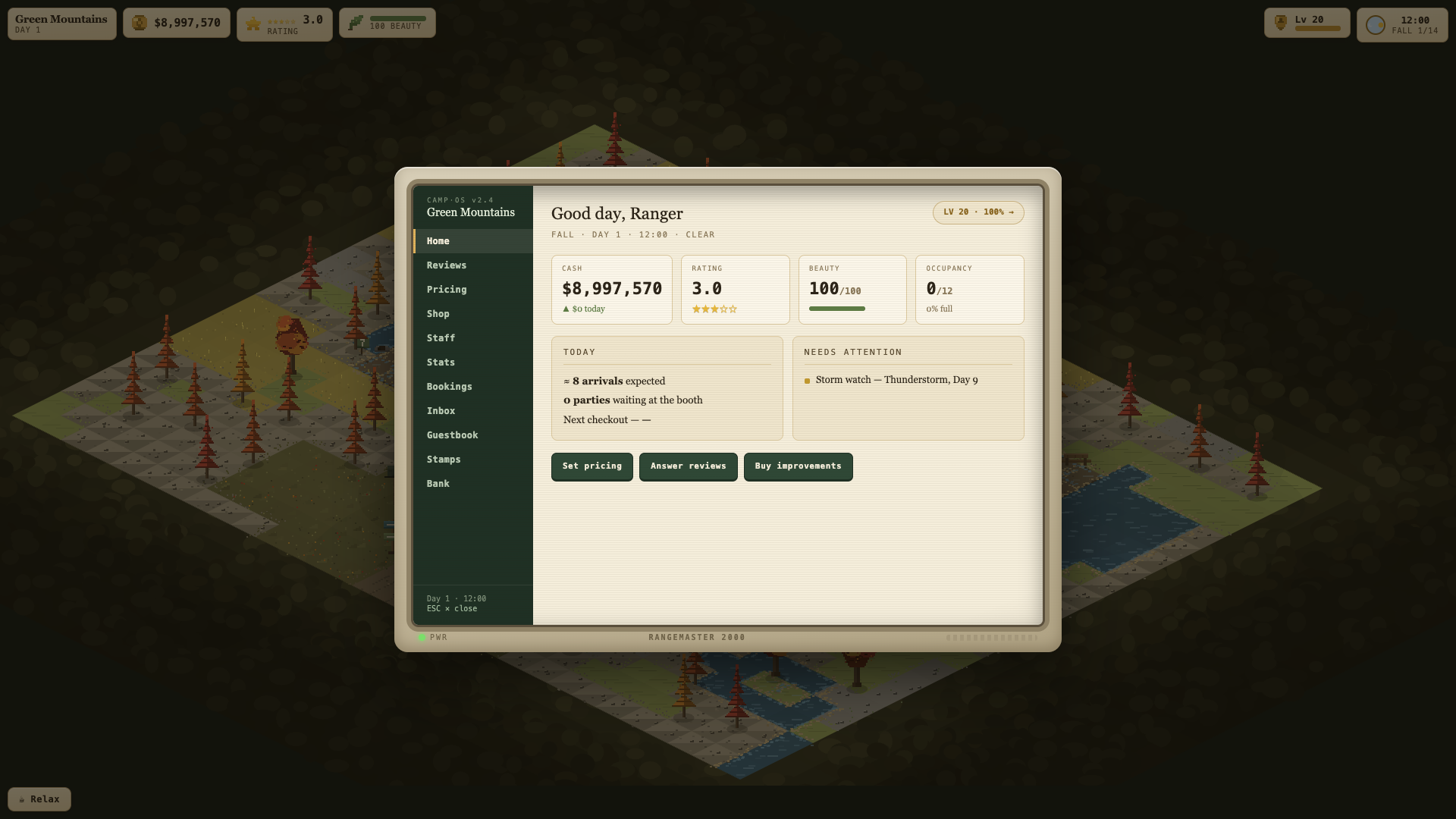
The booth, meanwhile, was reborn as the CAMP·OS Field Console — a left-rail dashboard that flips to a night theme after dark and runs reviews, pricing, the shop, staff, bookings, the bank and more from one screen. Campsite upgrades became a tiered ladder — picnic table → fire ring → flowers → trail sign → hookup → a site-specific upgrade → glamping — reservations now unlock at level 3, and beauty and ratings were rebalanced so a 4-star park is something you earn.
A valley that lives by the calendar
With the bones in place, the park came alive across the year. You can now draw footpaths — drag to lay a route — and guests and staff actively route along them and move faster, so smart layout speeds up every check-in and cleanup. Amenities (restrooms, shower houses, Wi-Fi hotspots, playgrounds) cover nearby sites and lift their ratings; marketing campaigns buy timed demand spikes and can bias the crowd toward fishing, families or hunting; and annual festivals — the Wildflower Festival, Anglers' Derby, Leaf-Peeping Weekend, Hunting Season Opener — dot the calendar and pack the park on set days, so you plan staffing and pricing around the rush.
Wilder country
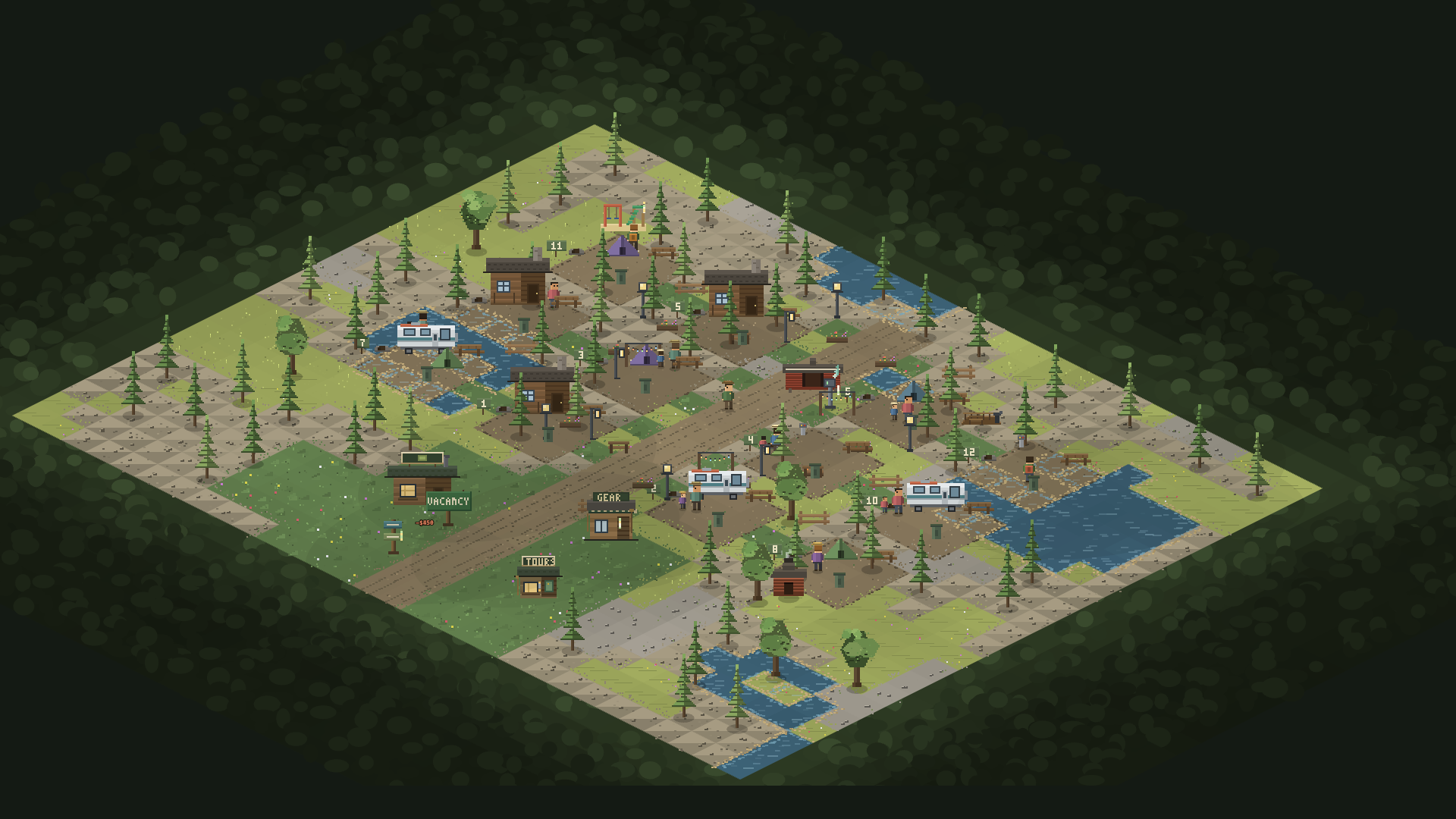
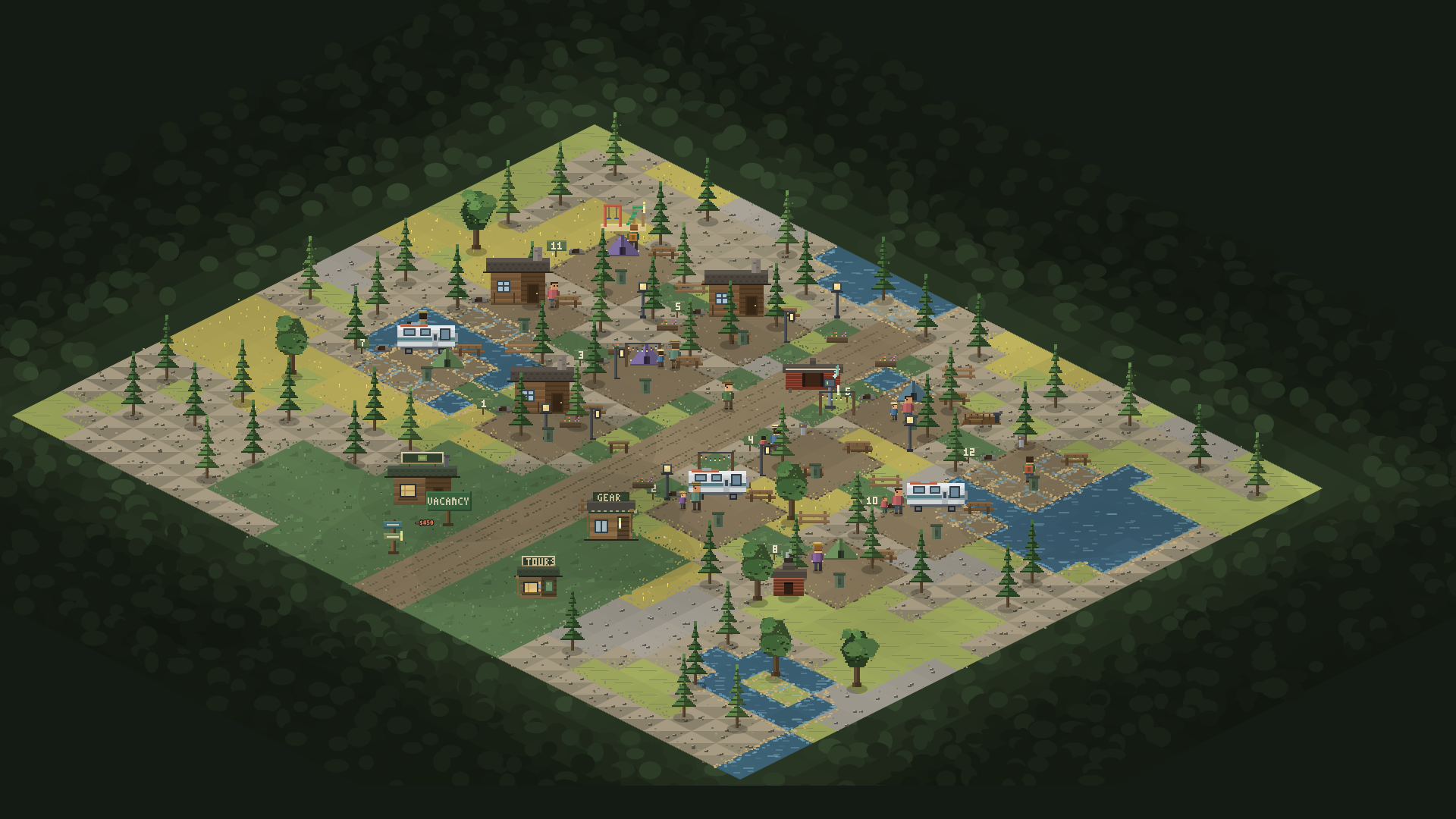
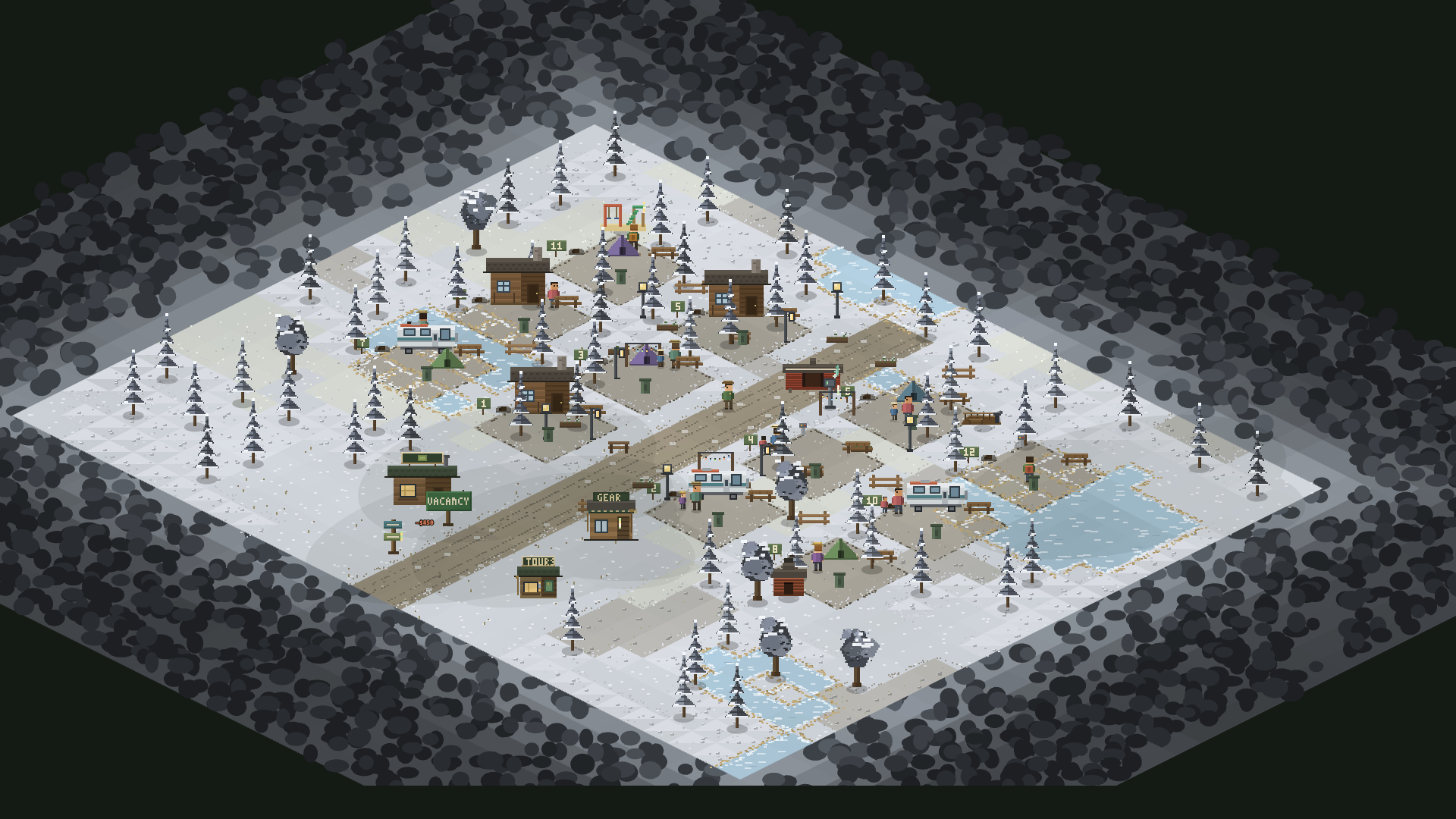
Regions then got more character. New biomes — wetland marshes, rocky talus, open meadows — roll in alongside the old water/forest/prairie/hills, and they're functional, not just pretty: a marsh makes a plot "waterside," talus makes it "rocky," a meadow makes it "open," which is exactly what the site's environment upgrades look for. Bayous in Louisiana, talus in the Rockies, meadows in the Green Mountains. The starting map got cleaner (just the through-road; you lay the rest), the tutorial got fuller, and — a small but satisfying fix — you can finally name your ranger anything, because the W/A/S/D movement keys no longer get swallowed while you're typing.
Tools, safety & seasons with teeth
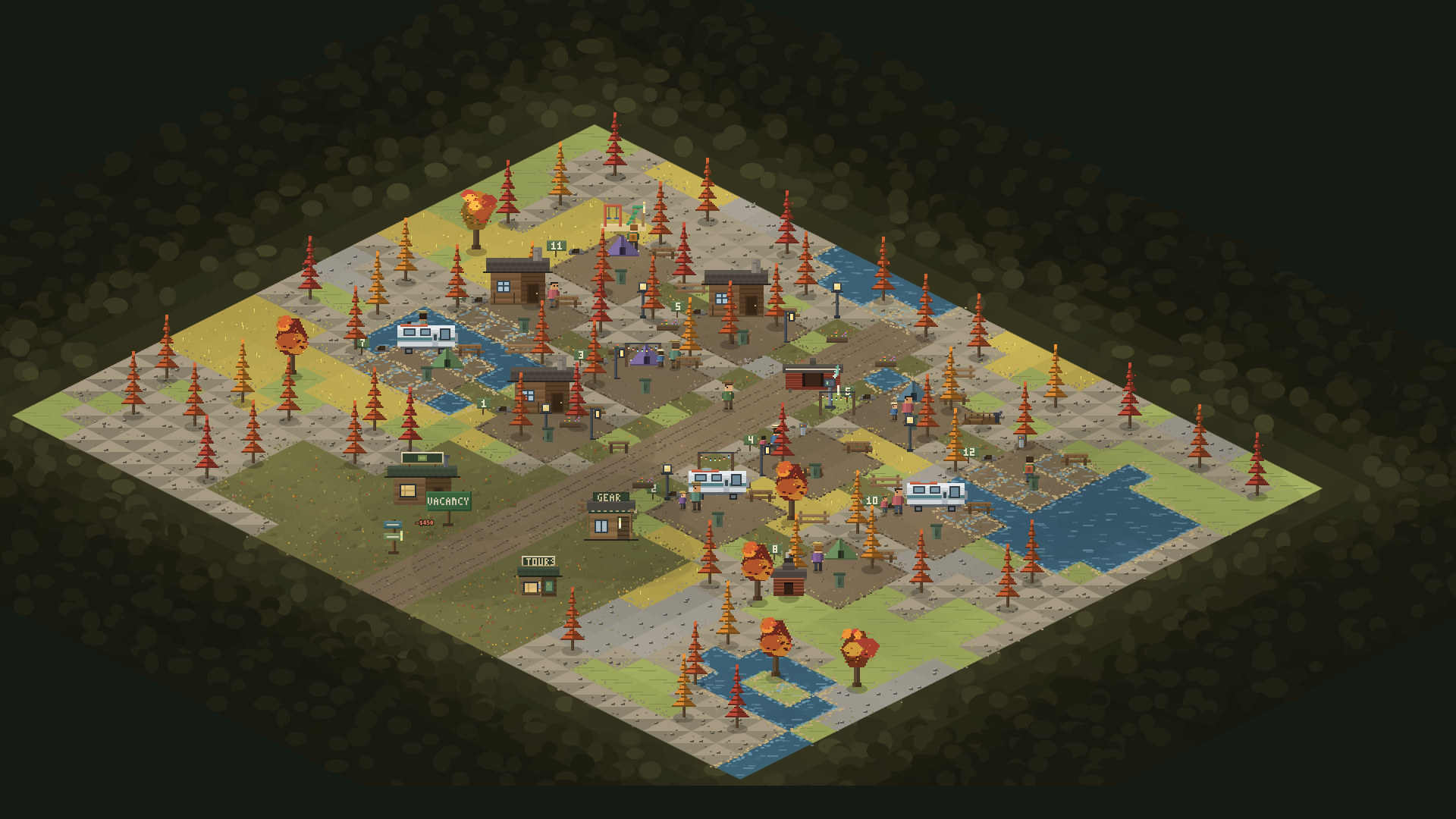
The last stretch deepened the toolbox and the danger in equal measure. You can now earn milestone stamps in a national-park-passport-style Stamp Book (first camper, a 5-star review, a full year, master angler…), buy a Felling Axe and Pickaxe that make clearing land 75% cheaper, and shape the ground itself with a landscaping shovel — plant trees, dig ponds, regrade rough dirt into meadow. Group Sites fit a second tent for big families, returning regulars come back by name in a good mood, and small caravans roll in together for a happiness bonus when you seat them side by side.
On the hazard side, a Weather Station sharpens the forecast, lanterns and string lights make a park glow after dark, a First Aid Station blunts storm injuries — and a new wildfire can spread tree to tree in dry country, which turns your axe and shovel into defensive tools: cleared brush is a firebreak. The pretty and the perilous, shipped in the same breath.
The front desk grows up
Most recently, the booking system became the real thing. Every reservation now holds a specific campsite for its whole stay, so multi-night stays can't be double-booked and walk-ups can only take sites that are genuinely free for the nights they want. Each request in the inbox shows you exactly which sites are open for those dates — and seating a guest on the site type their activity loves (anglers on the water, hikers near the trailhead) earns a ~20% preferred-site payout and a happier review. There's a live availability grid across the next eight days, an assign-on-map mode to reshuffle bookings by clicking a glowing site, and a freshly reorganised Shop that puts your most-used action right at the top.
Much more to come
The valley is far from finished. Landing or already in flight: the per-site reservation overhaul above, returning regulars, and group caravans. Cataloged and coming: a mobile / touch layout so it plays on a phone, a soft "win" / prestige goal to chase, live seasonal screenshots in the region picker, hosted activities and ranger programs you run yourself, and a cross-save Stamp Book that remembers your achievements between parks.
Roughly two weeks, eighteen updates, around sixty shipped features and fixes — all in a browser game with no build step and no download. Every update is a merged PR and a line in the in-game changelog, and the roadmap stays public. This is the early middle of the story, not the end of it.
If you want to see where it's at, the best thing is to go run a park for an afternoon. Pick a region, plant your flag, and see how your valley handles its first storm.